
Belk · Ecommerce Cart + Checkout Redesign
People were adding products to their bag
They just weren’t buying them
Ovative’s analytics revealed a meaningful drop-off between Add to Bag and Checkout, showing that purchase intent wasn’t translating into completed purchases.
5%
Increase in Revenue per Visit*
$1.5M
Incremental Revenue*
*Post-launch CRO performance data shared by Ovative.
The data showed us where
The research showed us why
Analytics identified the drop-off. I dug into customer feedback, Baymard research, and established ecommerce patterns to understand what was getting in the way.
UNCLEAR EXPECTATIONS
Required vs. optional information wasn’t obvious.
PRICE UNCERTAINTY
Estimated costs in cart didn’t include tax.
LOW TRUST
Trust signals were lacking, while return policies and customer service were hard to find.
The problem wasn’t just usability
It was confidence
Individually, these issues seemed small. Together, they created uncertainty at the exact moment customers were deciding whether to buy.
OUR SOLUTION
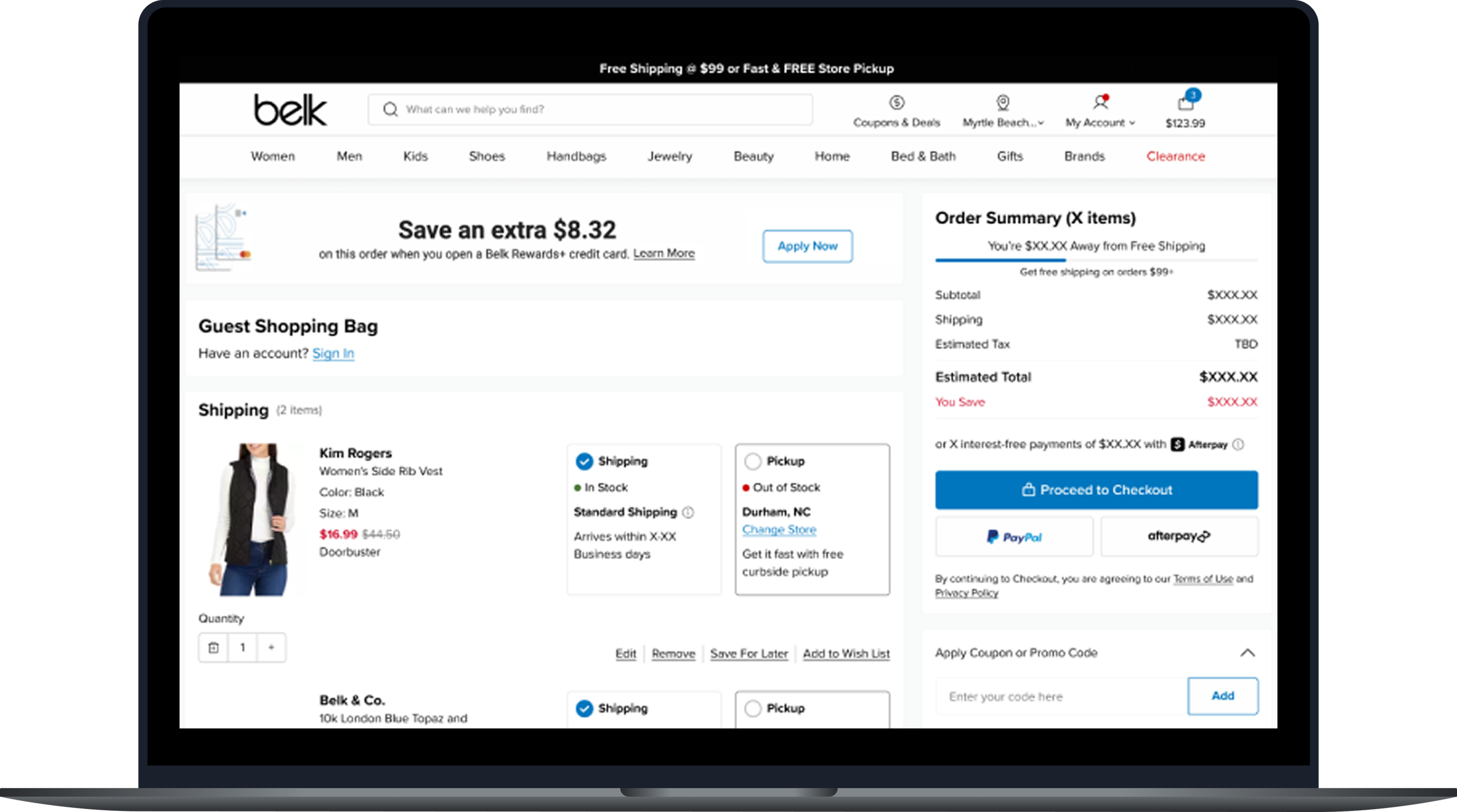
Make the path to purchase feel clear, predictable, and trustworthy
The work behind the polish
People were adding products to their bag
They just weren’t buying them
Ovative’s analytics revealed a meaningful drop-off between Add to Bag and Checkout, showing that purchase intent wasn’t translating into completed purchases.
The data showed us where
The research showed us why
Analytics identified the drop-off. I dug into customer feedback, Baymard research, and established ecommerce patterns to understand what was getting in the way.
The problem wasn’t just usability
It was confidence
Individually, these issues seemed small. Together, they created uncertainty at the exact moment customers were deciding whether to buy.
The work behind the polish
Every recommendation, from cart to checkout, was grounded in research and stress-tested with the team before it shipped.
Designing confidence into the journey
The same principles guided a redesigned cart and checkout, consistent from desktop to the Belk app.
The interface was the output
Confidence was the product
This work reinforced something I’ve carried into every product engagement since: the strongest design decisions rarely come from polishing the interface first. They come from understanding where users hesitate, what information they need to move forward, and how the product can reduce uncertainty without adding friction.
By connecting behavioral signals, customer feedback, research, and business goals, I turned a conversion problem into a clearer, more trustworthy purchase experience.